Furosemide Prices, Trends, News, Chart, Market Analysis and Forecast 2026
- Mar 27
- 6 min read
Introduction
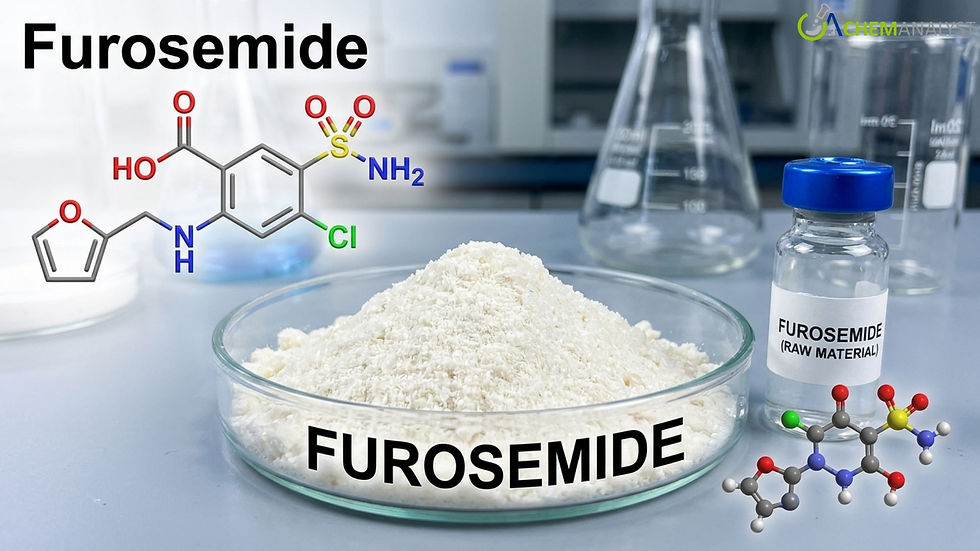
Furosemide, a widely used loop diuretic in the pharmaceutical industry, plays a critical role in treating conditions such as edema, hypertension, and heart failure. As an essential drug, its pricing dynamics are influenced not only by traditional supply-demand fundamentals but also by macroeconomic indicators, production costs, energy prices, and healthcare demand trends.
In Q3 2025, the global Furosemide prices landscape presented a mixed trajectory across major regions, including North America, Asia-Pacific (APAC), and Europe. While the United States experienced a price increase driven by rising costs and strong demand, China witnessed a decline due to overcapacity and weak consumption. Meanwhile, Europe showed a softer pricing trend despite persistent energy cost pressures.
Furosemide Prices in North America
Rising Prices in the United States
In Q3 2025, Furosemide prices in the United States recorded a notable increase, primarily driven by higher production costs and robust pharmaceutical demand. The rise in pricing reflects broader inflationary pressures and tightening supply conditions in the chemical and pharmaceutical sectors.
Get Real time Prices for Furosemide: https://www.chemanalyst.com/Pricing-data/furosemide-1495
Key Market Drivers
Increased Production Costs
Production costs for Furosemide rose significantly during the quarter. The Consumer Price Index (CPI) increased by 3.0% year-over-year in September 2025, while the Producer Price Index (PPI) climbed by 2.6% in August 2025. These indicators reflect rising input costs, including labor, raw materials, and utilities, which directly impacted manufacturing expenses.
Strong Pharmaceutical Demand
Demand for Furosemide remained strong, supported by a 5.42% increase in retail sales in September 2025. As an essential medication, its consumption remained resilient despite broader economic fluctuations. Increased healthcare access and steady prescription rates further reinforced demand.
Tightening Supply Conditions
Chemical industry inventories, including raw materials required for Furosemide production, declined during Q3 2025. This reduction in inventory levels signaled tightening supply, which contributed to upward pressure on prices.
Rising Energy Costs
Natural gas, a critical energy source in pharmaceutical manufacturing, experienced a year-over-year price increase in September 2025. Higher energy costs translated into increased operational expenses for manufacturers, further elevating Furosemide prices.
Stable Industrial and Labor Market Conditions
Industrial production showed marginal growth of 0.1% year-over-year, indicating stable economic activity. Additionally, a low unemployment rate of 4.3% supported healthcare accessibility, indirectly boosting pharmaceutical demand.
Consumer Sentiment Trends
Although consumer confidence declined to 94.2 in September 2025, the impact on Furosemide demand was minimal due to its classification as an essential drug.
Summary: North America
Overall, Furosemide prices in North America remained on an upward trajectory in Q3 2025, supported by strong demand fundamentals, rising production costs, and tightening supply conditions.
Furosemide Prices in Asia-Pacific (APAC)
Declining Prices in China
In contrast to North America, Furosemide prices in China declined quarter-over-quarter in Q3 2025. The downward trend was primarily driven by weak demand and excess production capacity within the chemical and pharmaceutical sectors.
Key Market Drivers
Reduced Production Costs
Furosemide production costs decreased due to a 2.3% year-on-year decline in producer prices in September 2025. Lower input costs, particularly in petrochemical feedstocks, contributed to reduced manufacturing expenses.
Falling Feedstock Prices
Petrochemical inputs such as benzene experienced price declines across Asia during Q3 2025. This easing of feedstock costs significantly lowered the overall cost of Furosemide production.
Weak Demand Environment
Demand for Furosemide faced challenges due to contracting manufacturing activity and a broader economic slowdown. Despite stable pharmaceutical demand, overall industrial weakness weighed on market sentiment.
Industrial Production and Consumer Indicators
China’s industrial production grew by 6.5% year-over-year in September 2025, indicating continued output expansion. However, consumer confidence remained subdued at 89.6, reflecting cautious spending behavior.
Overcapacity and Oversupply
One of the most significant factors influencing the market was China’s substantial chemical overcapacity. Increased production volumes led to oversupply, exerting downward pressure on both domestic and global Furosemide prices.
Energy Cost Dynamics
Natural gas prices remained elevated during Q3 2025, partially offsetting the benefits of lower feedstock costs. However, the overall impact of declining raw material prices outweighed energy cost pressures.
Retail Sales Support
Retail sales grew by 3.0% year-over-year in September 2025, indicating stable consumer demand for essential pharmaceuticals like Furosemide.
Market Outlook in APAC
The Furosemide price index in APAC is expected to remain under pressure in the near term. Persistent overcapacity, coupled with soft demand conditions, is likely to continue influencing price trends unless production cuts or demand recovery materialize.
Summary: Asia-Pacific
Overall, Furosemide prices in APAC declined in Q3 2025 due to reduced production costs, weak demand, and structural oversupply in the Chinese market.
Track real time for Furosemide prices and market trends on ChemAnalyst: https://www.chemanalyst.com/ChemAnalyst/PricingForm?Product=Furosemide
Furosemide Prices in Europe
Softening Prices in Germany
In Q3 2025, Furosemide prices in Germany showed a modest decline on a quarter-over-quarter basis. The pricing trend reflected easing producer price pressures, although high energy costs continued to impact production economics.
Key Market Drivers
Easing Producer Price Pressures
The decline in producer prices contributed to a softening of Furosemide prices. Lower input cost inflation helped stabilize manufacturing expenses.
High Energy Costs
Despite easing producer prices, European energy costs remained persistently high. This created upward pressure on production costs, limiting the extent of price declines.
Strengthening Pharmaceutical Demand
Demand within the German pharmaceutical sector remained strong, supporting the overall consumption of Furosemide. The essential nature of the drug ensured consistent demand levels.
Industrial and Manufacturing Activity
Germany’s industrial production contracted by 1.0% year-over-year in September 2025. The manufacturing sector also experienced contraction, indicating broader economic challenges.
Consumer Confidence and Employment
Consumer confidence remained weak at -23.6, reflecting economic uncertainty. However, a low unemployment rate of 3.9% provided some support to healthcare demand.
Supply-Side Pressures
The European chemical industry underwent restructuring during Q3 2025, leading to tightening supply conditions for certain intermediates used in Furosemide production.
Inflation and Retail Activity
The Consumer Price Index (CPI) rose by 2.4% year-over-year in September 2025, indicating moderate inflation. Retail sales increased by 0.8% year-over-year, suggesting stable but modest consumer spending.
Summary: Europe
Overall, Furosemide prices in Europe exhibited a slight downward trend in Q3 2025, influenced by easing producer prices and economic challenges, despite ongoing energy cost pressures and steady pharmaceutical demand.
Global Furosemide Market Trends
Diverging Regional Price Movements
The global Furosemide market in Q3 2025 was characterized by contrasting regional trends:
North America: Price increase due to strong demand and rising costs
APAC: Price decline due to oversupply and weak demand
Europe: Slight price softening amid mixed economic conditions
Key Influencing Factors
Macroeconomic Indicators
CPI, PPI, and industrial production levels played a significant role in shaping production costs and demand patterns.
Energy Prices
Natural gas and energy costs remained a critical factor influencing pharmaceutical manufacturing expenses across all regions.
Supply Chain Dynamics
Inventory levels, overcapacity, and chemical industry restructuring significantly impacted regional supply-demand balances.
Healthcare Demand
As an essential drug, Furosemide demand remained relatively inelastic, providing stability even during economic fluctuations.
Furosemide Price Forecast
Short-Term Outlook (Q4 2025)
North America: Prices are expected to remain firm due to sustained demand and elevated production costs.
APAC: Prices may continue to face downward pressure unless production cuts address oversupply.
Europe: Prices are likely to remain stable with slight fluctuations, depending on energy cost trends and economic recovery.
Long-Term Outlook
Over the long term, Furosemide prices are expected to stabilize as global supply chains adjust and macroeconomic conditions normalize. However, key risks include:
Volatility in energy prices
Changes in pharmaceutical regulations
Shifts in global healthcare demand
Geopolitical and trade-related disruptions
Conclusion
The Furosemide price trend in Q3 2025 highlights the complex interplay of regional economic conditions, production costs, and supply-demand dynamics. While North America experienced rising prices due to strong demand and inflationary pressures, APAC faced declining prices amid overcapacity and weak demand. Europe, on the other hand, showed moderate price softening influenced by mixed economic indicators.
As an essential pharmaceutical product, Furosemide continues to demonstrate resilient demand across global markets. However, price movements remain highly sensitive to macroeconomic shifts, energy costs, and supply chain developments.
Market participants, including manufacturers, distributors, and healthcare providers, must closely monitor these factors to navigate pricing volatility and ensure stable supply in the coming quarters.
About Us:
Welcome to ChemAnalyst, a next–generation platform for chemical and petrochemical intelligence where innovation meets practical insight. Recognized as “Product Innovator of the Year 2023” and ranked among the “Top 100 Digital Procurement Solutions Companies,” we lead the digital transformation of the global chemical sector. Our online platform helps companies handle price volatility with structured analysis, real-time pricing, and reliable news and deal updates from across the world. Tracking over 500 chemical prices in more than 40 countries becomes simple and efficient with us.
Contact Us:
ChemAnalyst
United States
Call +1 3322586602
420 Lexington Avenue, Suite 300, New York, NY,
United States, 10170
Email: sales@chemanalyst.com
Website: https://www.chemanalyst.com/
Facebook: https://www.facebook.com/ChemAnalysts/
Twitter: https://x.com/chemanalysts
YouTube: https://www.youtube.com/@chemanalyst
Instagram: https://www.instagram.com/chemanalyst_


Comments